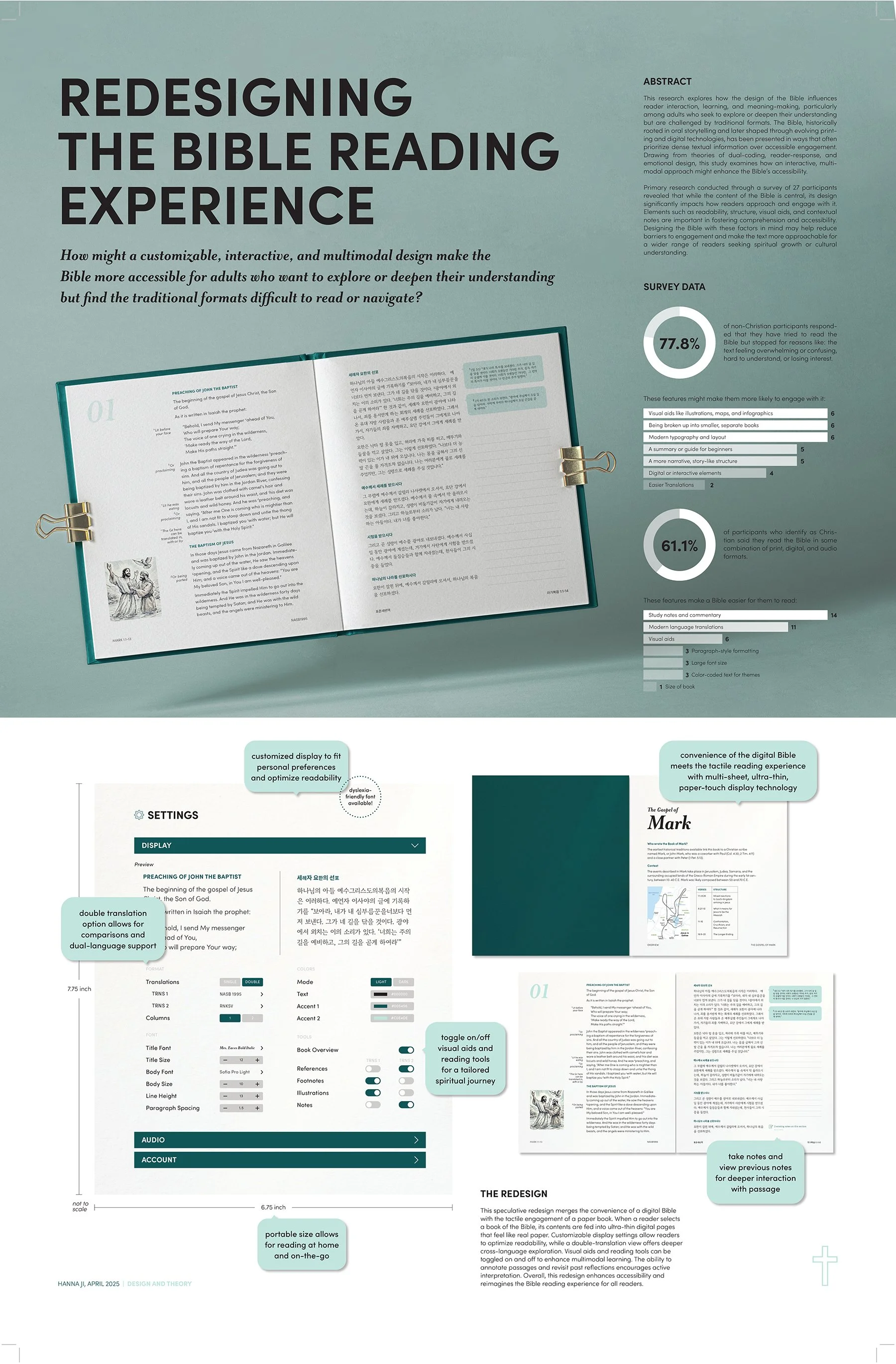
Redesigning the Bible Reading Experience
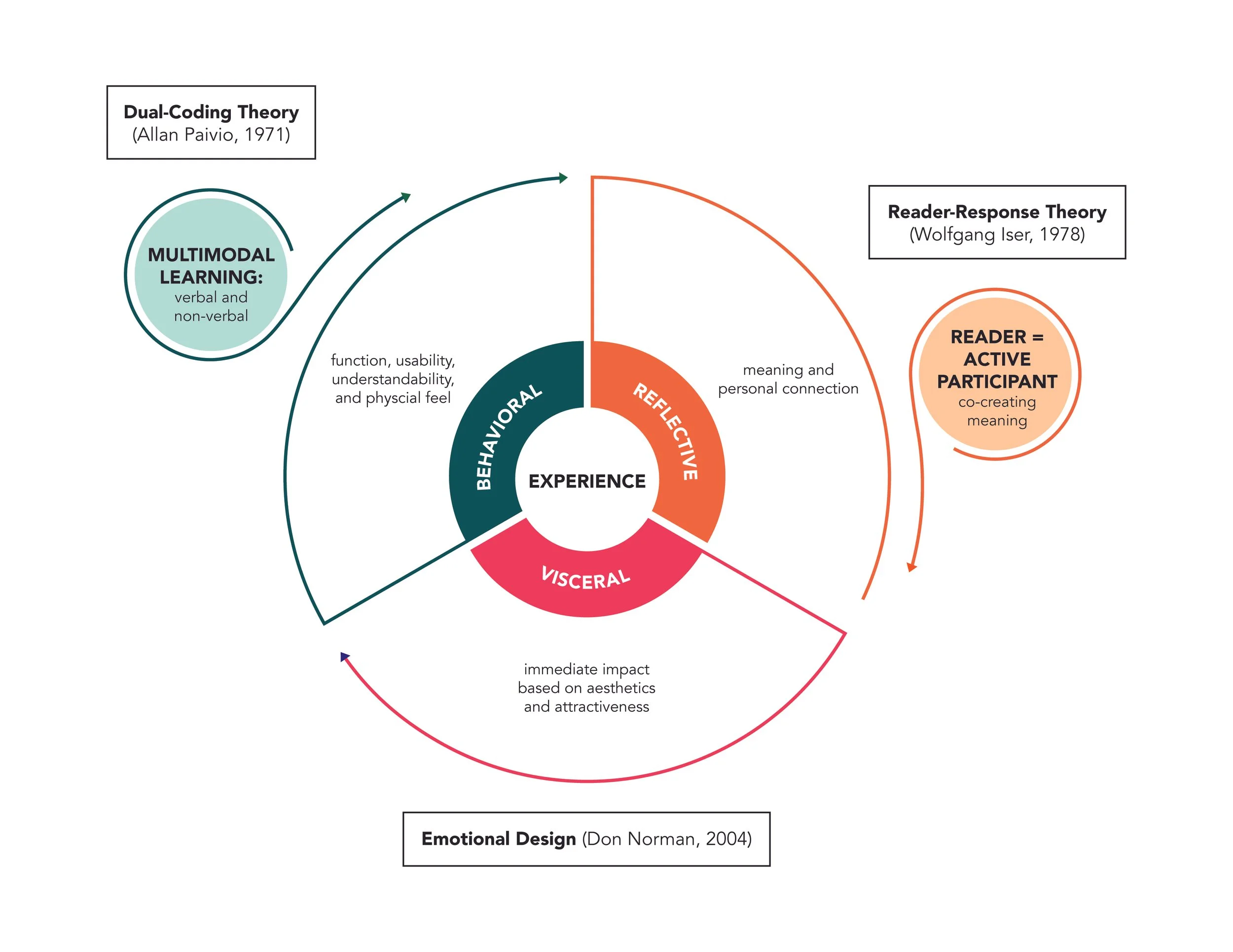
Conducted as part of the Design and Theory graduate course, this research explores how the design of the Bible influences reader interaction, learning, and meaning-making, particularly among adults who seek to explore or deepen their understanding but are challenged by traditional formats. The Bible, historically rooted in oral storytelling and later shaped through evolving printing and digital technologies, has been presented in ways that often prioritize dense textual information over accessible engagement. Drawing from theories of dual-coding, reader-response, and emotional design, this study examines how an interactive, multimodal approach might enhance the Bible’s accessibility.
Primary research conducted through a survey of 27 participants revealed that while the content of the Bible is central, its design significantly impacts how readers approach and engage with it. Elements such as readability, structure, visual aids, and contextual notes are important in fostering comprehension and accessibility. Designing the Bible with these factors in mind may help reduce barriers to engagement and make the text more approachable for a wider range of readers seeking spiritual growth or cultural understanding.