Designing a Supportive Community:
The Link between Perfectionism, Stress, and Holistic Well-Being among Graduate Design Students
This project explores how the pressures of graduate design education, including but not limited to intense workloads, tight deadlines, and the constant pursuit of creative excellence, contribute to stress and perfectionism among students. Graduate education in design presents unique challenges due to the creative nature of the field, where students are often driven to set unrealistically high standards for themselves and reject anything less than perfection. As formalized graduate design education is still a relatively young and evolving discipline, many of these challenges remain underexplored. This research asks: how fostering supportive communities might help mitigate stress caused by perfectionism and improve the holistic well-being of graduate design students.
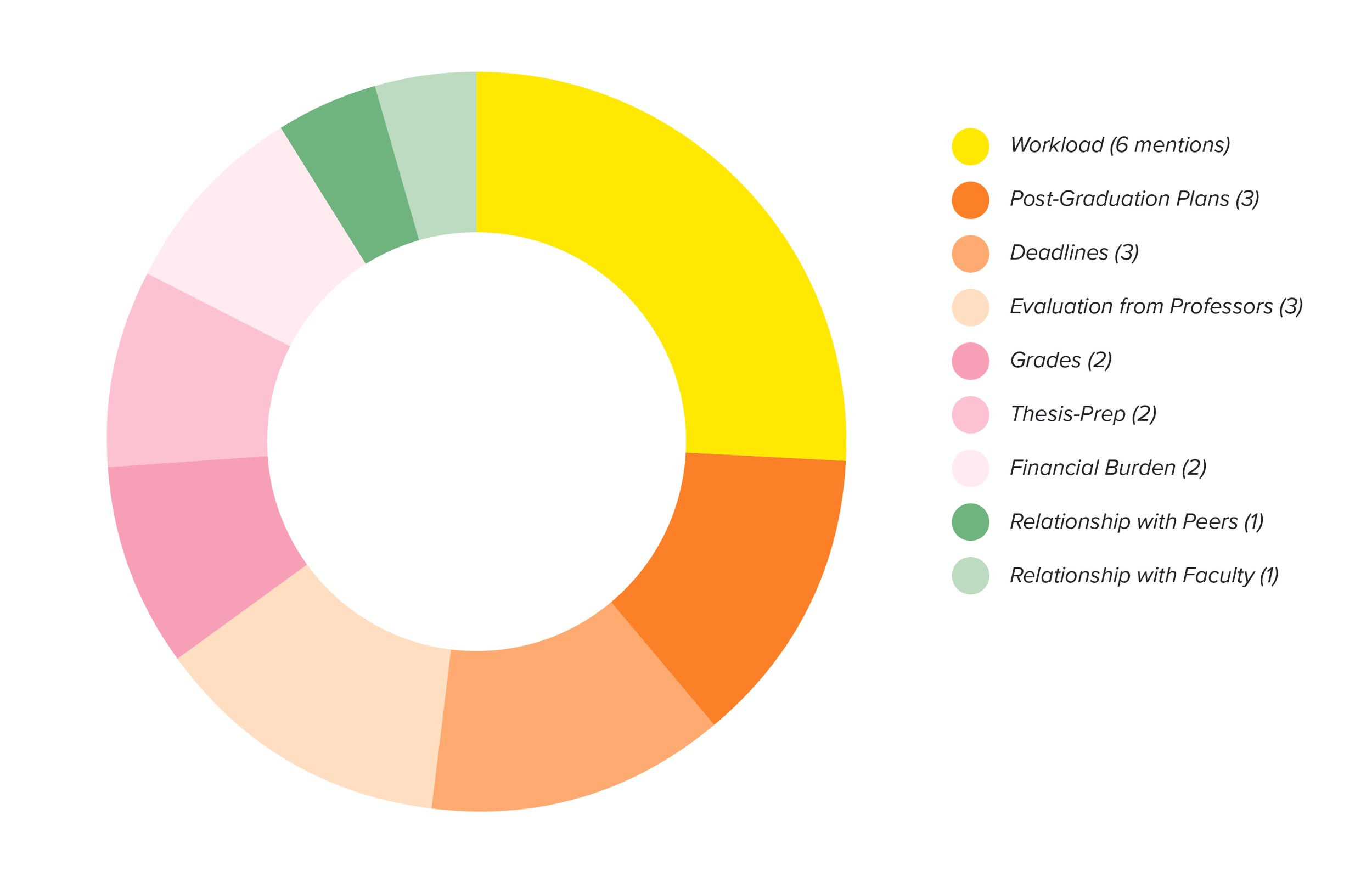
sources of stress ranked in the top 3 for all participants
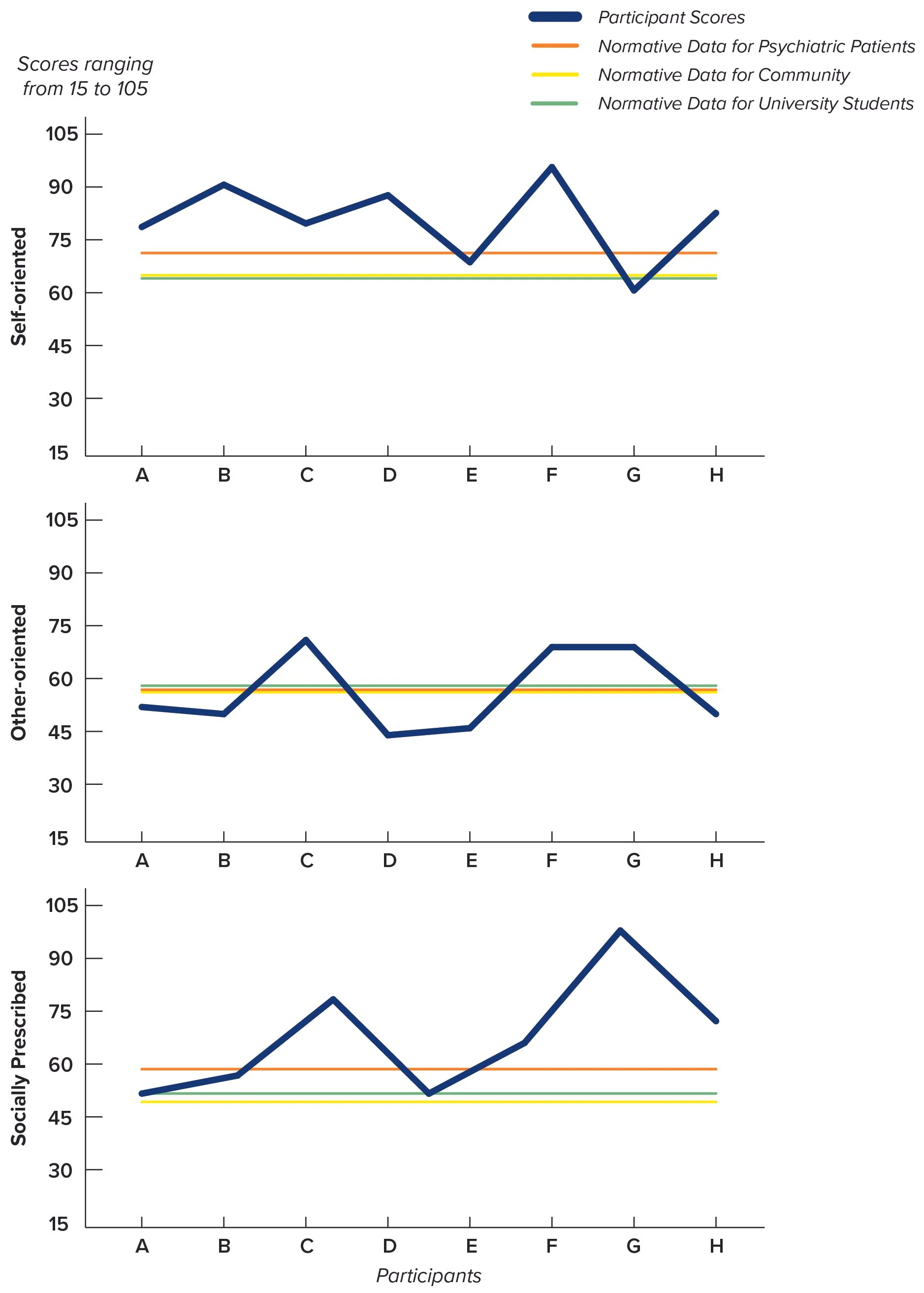
HFMPS scores for participants compared to normative data
This study analyzes the factors that contribute to stress among graduate design students, focusing on Master of Design students at the University of Arkansas, and examines the relationship between stress levels and different types of perfectionism. A mixed-methods approach was used, beginning with a pre-workshop survey that assessed participants’ stress levels, sources of stress, coping mechanisms, and physical, psychological, emotional, and social well-being. A self-reported questionnaire using the Hewitt–Flett Multidimensional Perfectionism Scale was administered to better understand the types and degrees of perfectionism present and to analyze their correlation with stress.
The surveys were followed by a hands-on, co-design workshop that invited students to collectively reflect on stress, healing, and growth through making and dialogue. Participants contributed to a shared paper-block activity that transformed individual expressions of stress into visual and written messages of encouragement, culminating in a collective artifact designed for display within the graduate studio. A post-workshop survey then assessed changes in stress levels and gathered student suggestions for building more supportive program cultures.
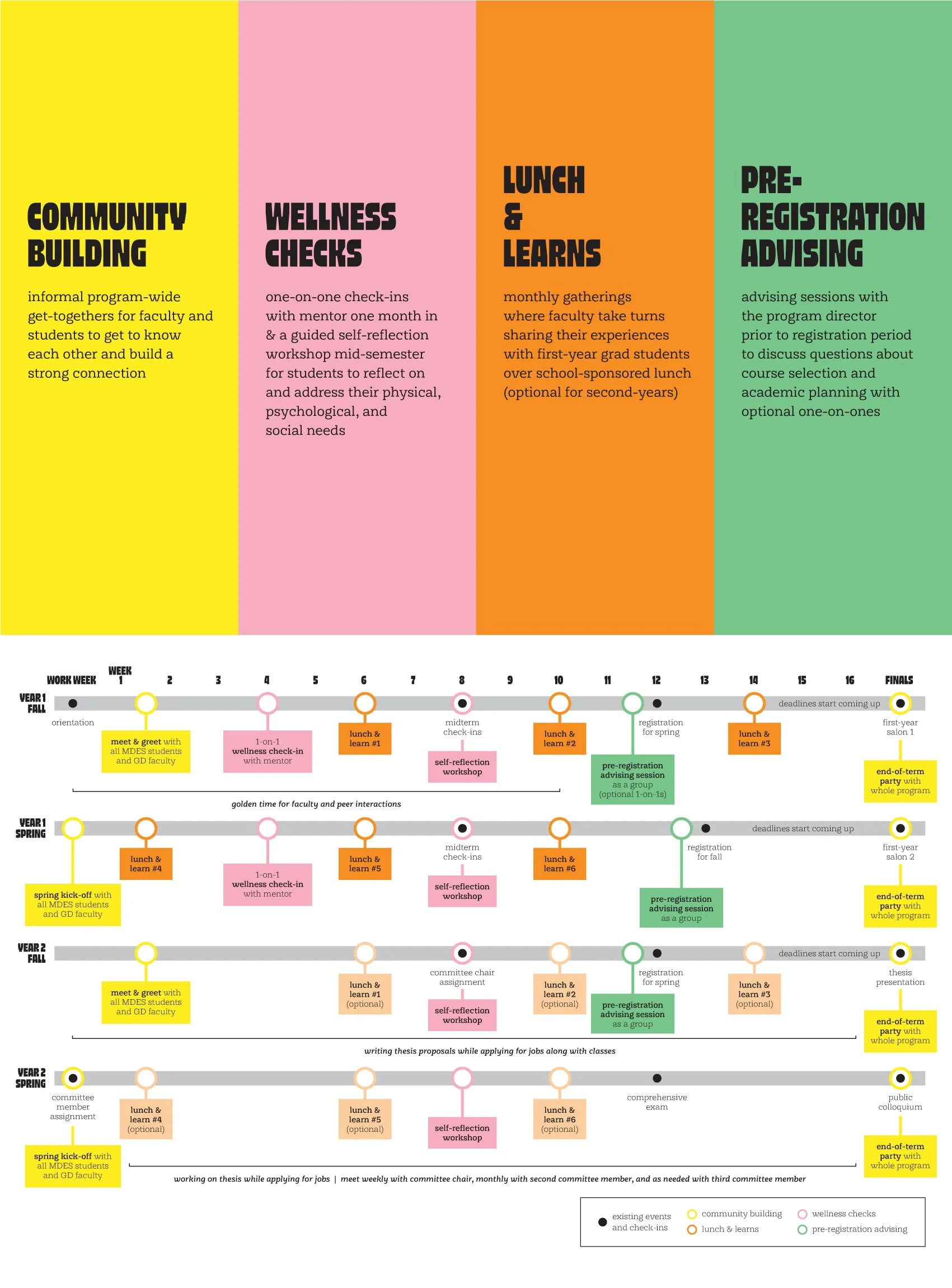
Based on the findings, this project proposes a series of program initiatives aimed at fostering connection, reducing isolation, and supporting graduate students’ holistic well-being: community-building gatherings, wellness checks, lunch & learns, and pre-registration advising sessions. Together, these initiatives position design as both a research method and a means of cultivating healthier, more resilient academic communities.