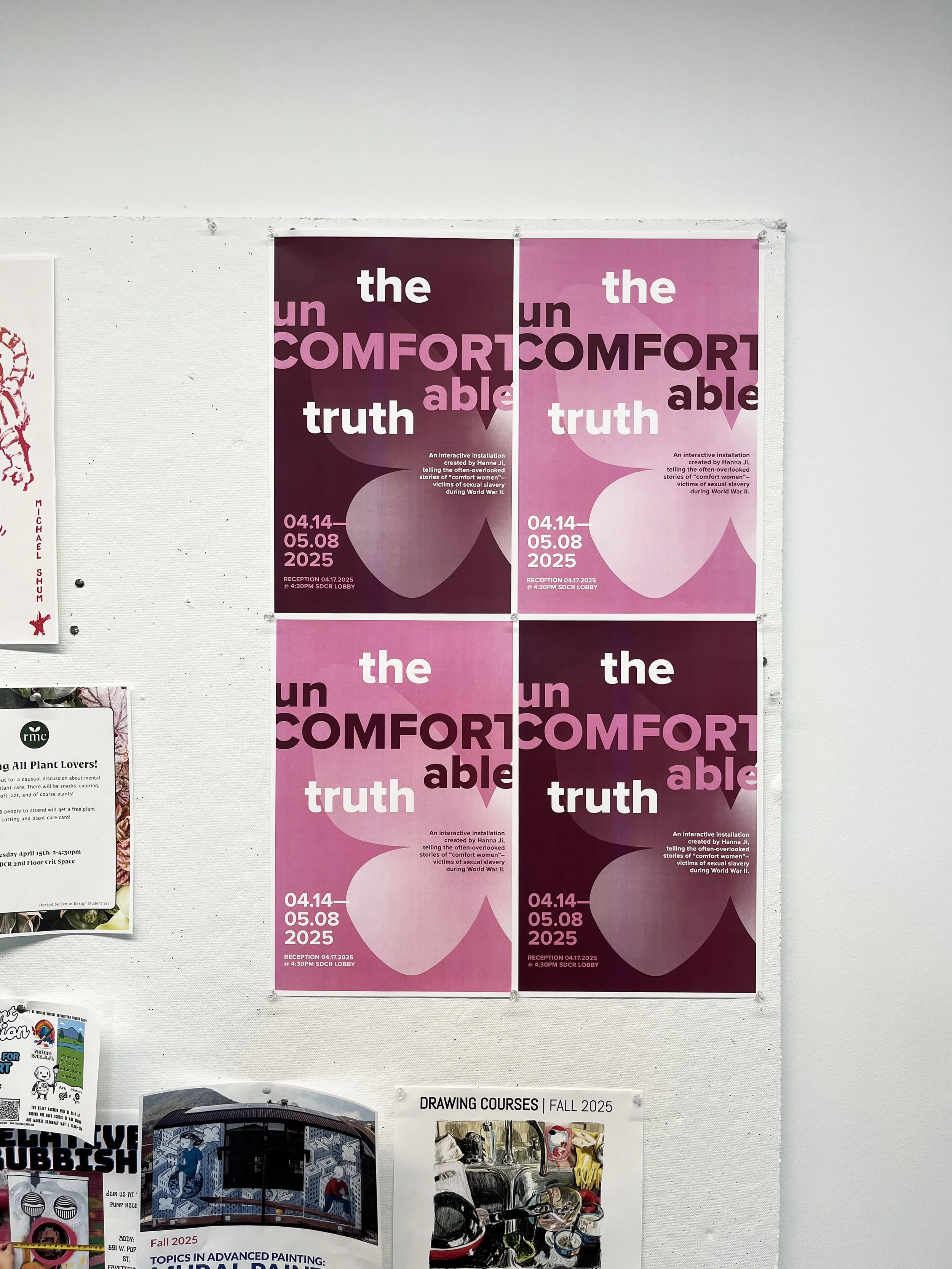
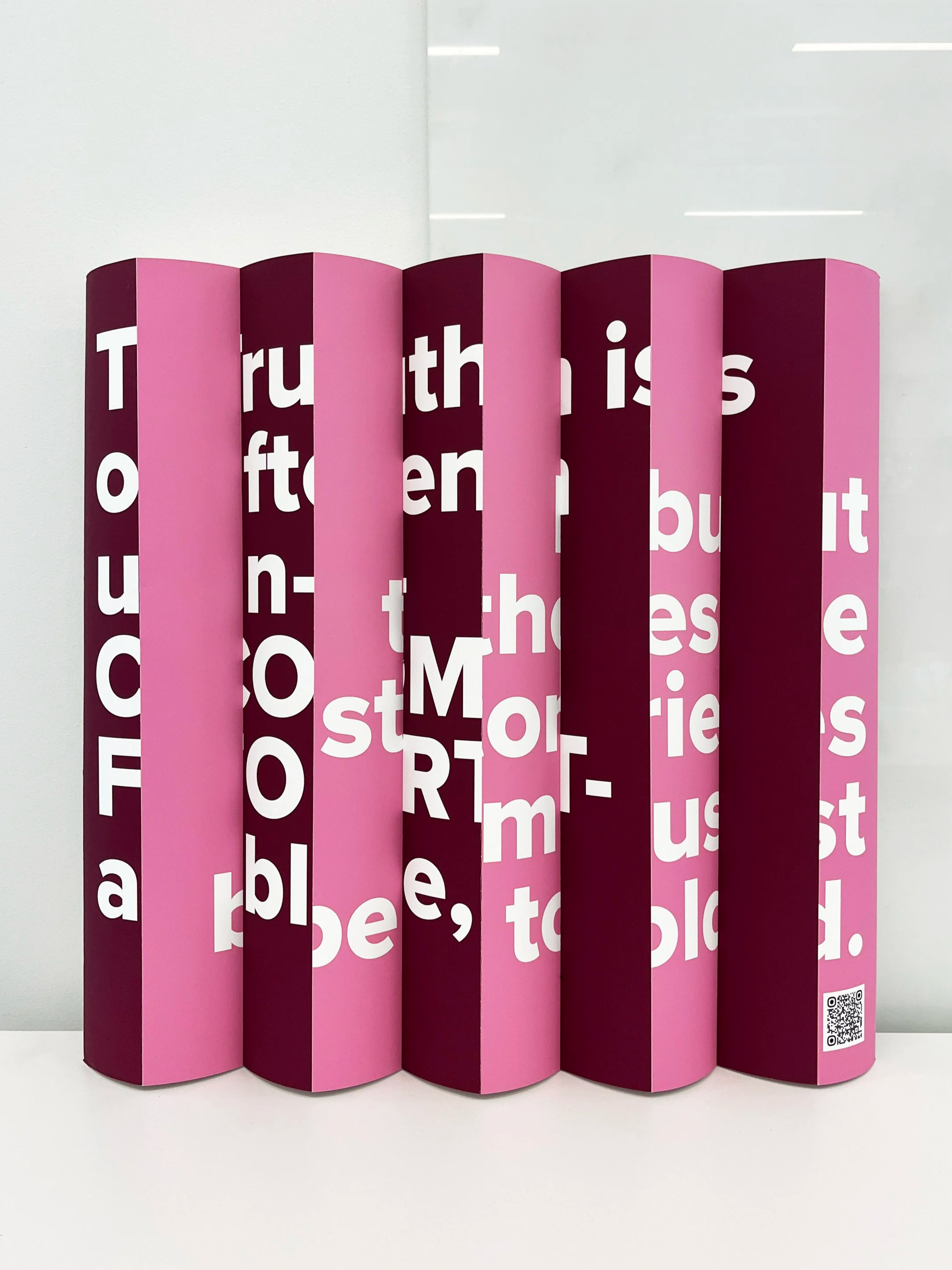
the unCOMFORTable truth
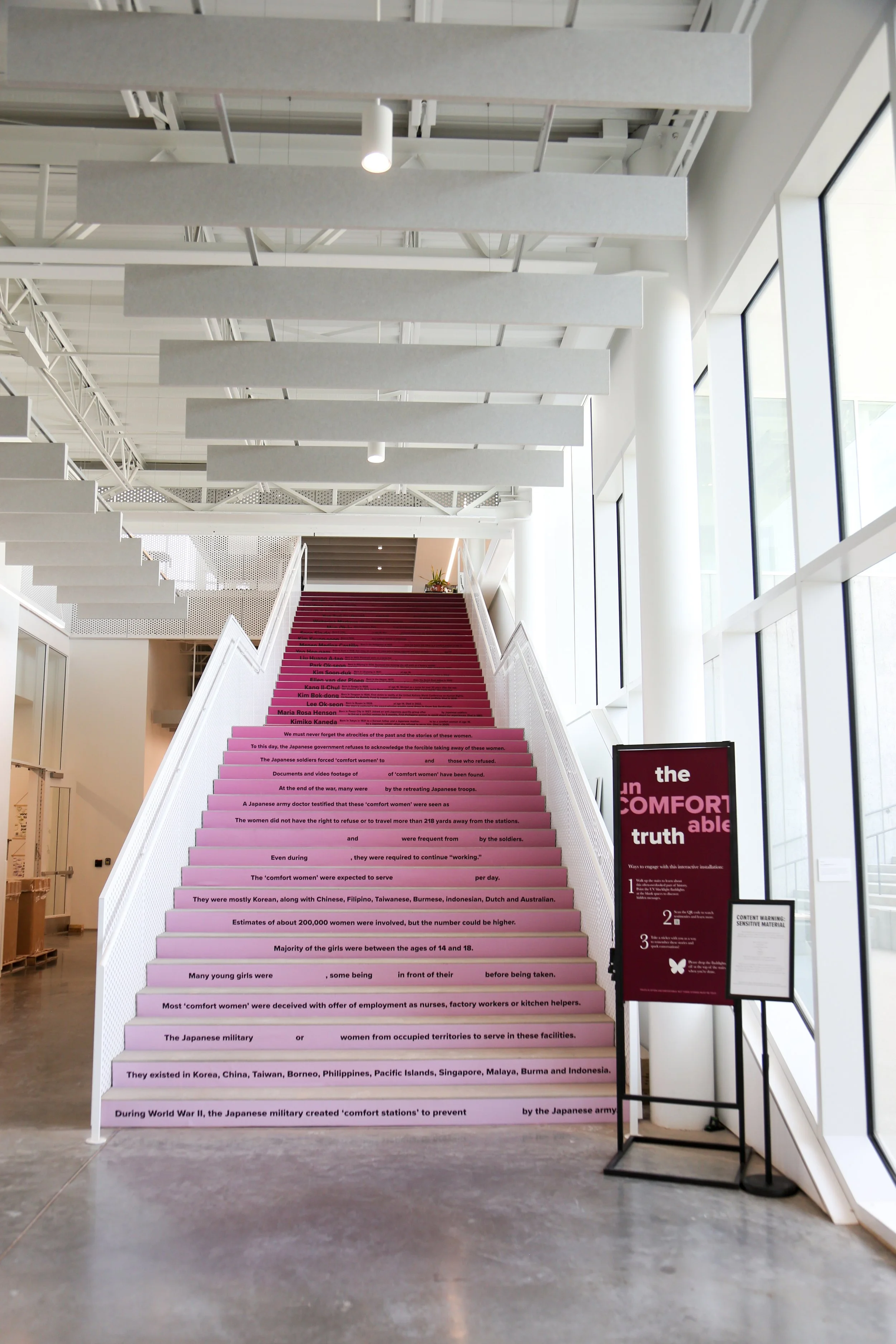
This large-scale, interactive installation examines how design can challenge dominant narratives, amplify silenced voices, and engage the public in meaningful dialogue. Drawing from the history of the so-called “comfort women,” victims of sexual slavery during World War II, the project considers how design can counter historical erasure and transform how difficult histories are encountered, remembered, and understood within academic institutions. By embedding storytelling within shared spaces, the installation positions design as a tool not only for preserving marginalized narratives, but also for inviting audiences to actively participate in historical reflection.
Installed on the main stairway of the Studio and Design Center at the University of Arkansas, the project transforms a high-traffic public space into an interactive site for critical engagement among students, faculty, and visitors. The installation opens with the phrase “Truth is often uncomfortable,” immediately confronting passersby with a provocation that invites both reflection and participation. Using vinyl graphics layered with concealed messages in UV blacklight-reactive ink, the work interweaves historical facts and personal testimonies, guiding viewers step by step through underrepresented stories. Blank spaces and hidden messages prompt viewers to move closer, use UV flashlights, and physically climb the stairs—shifting them from passive observers to active seekers of truth. This intentional discomfort fosters care by allowing audiences to engage at a level aligned with their personal comfort, while emphasizing the effort required to uncover suppressed narratives.
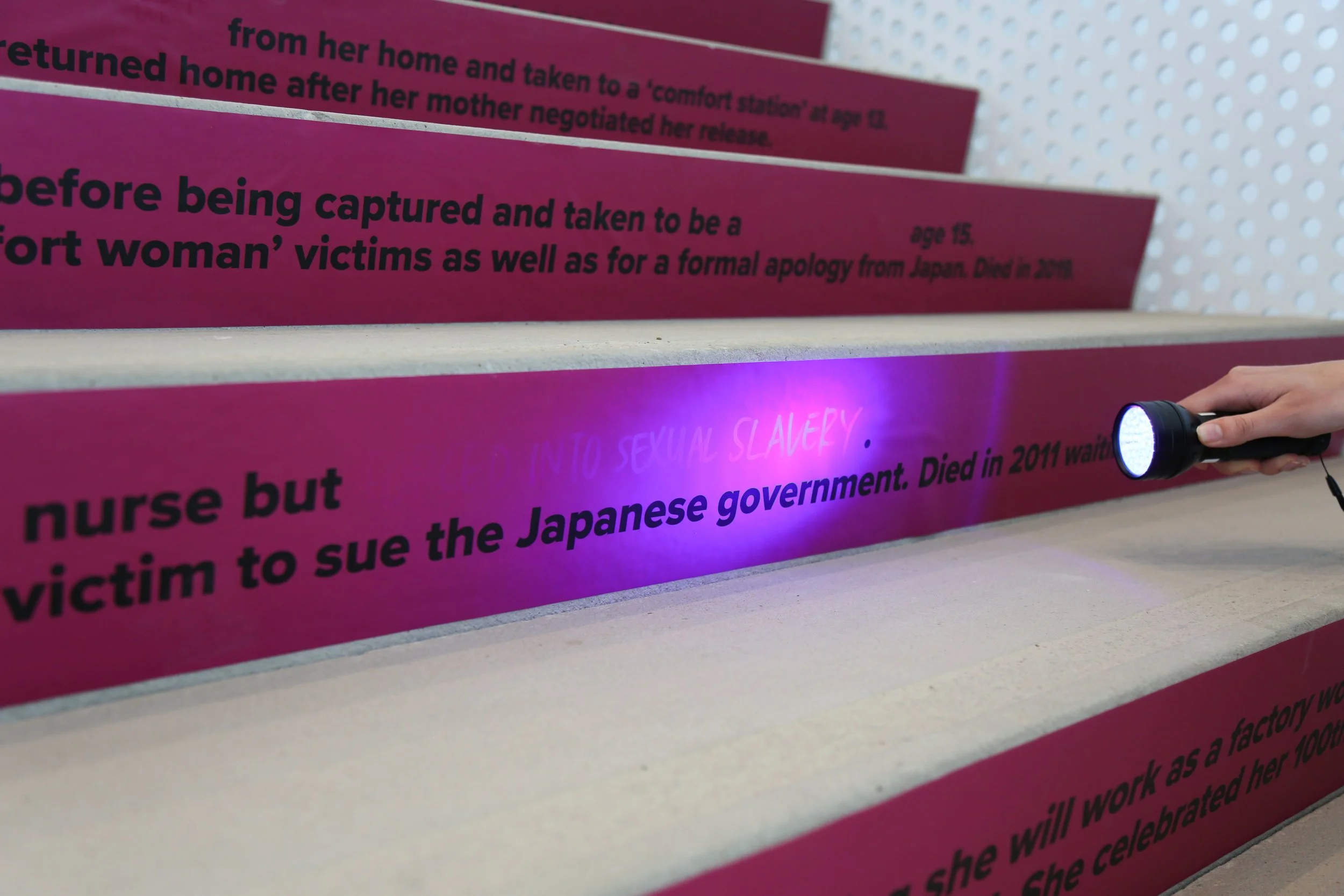
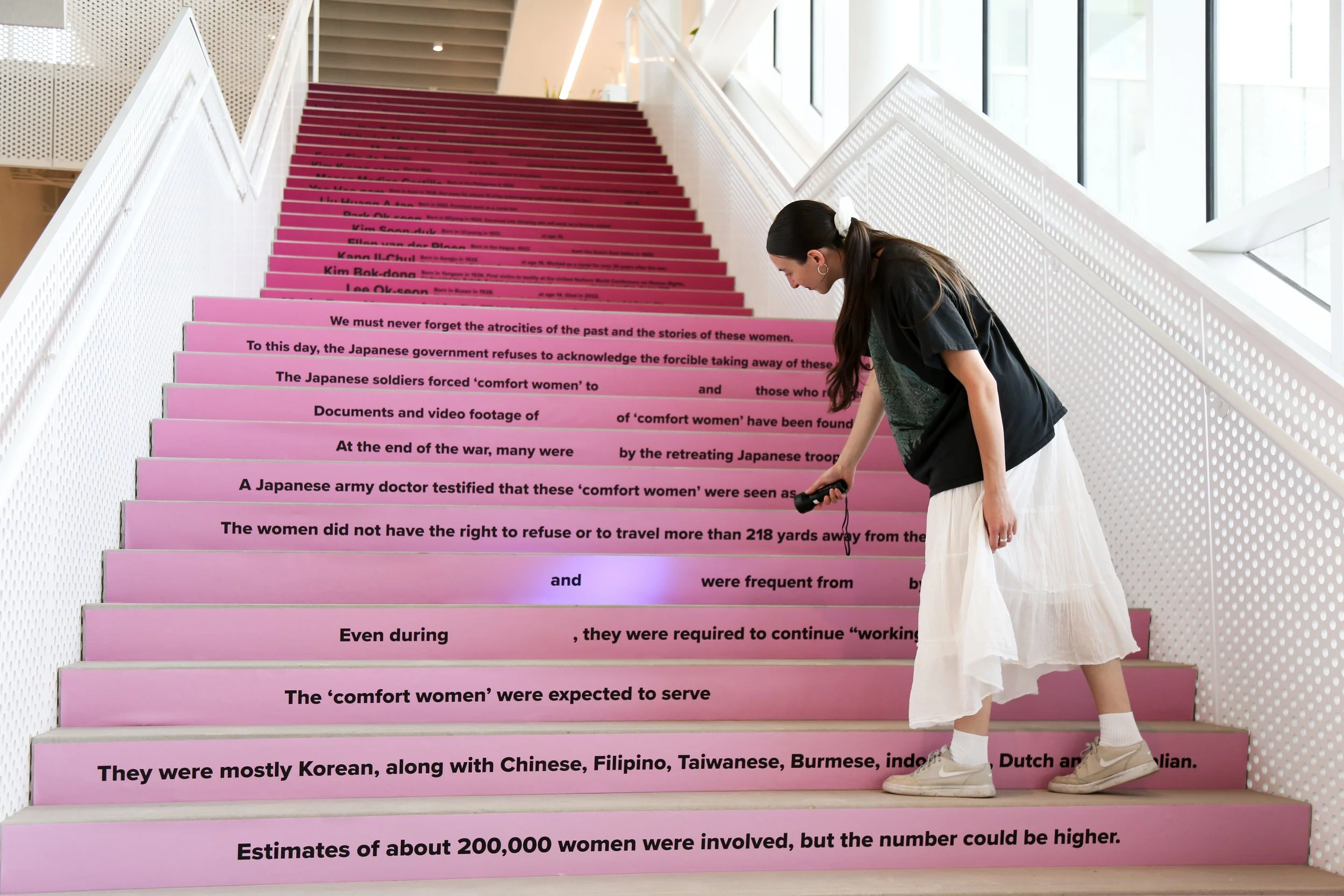
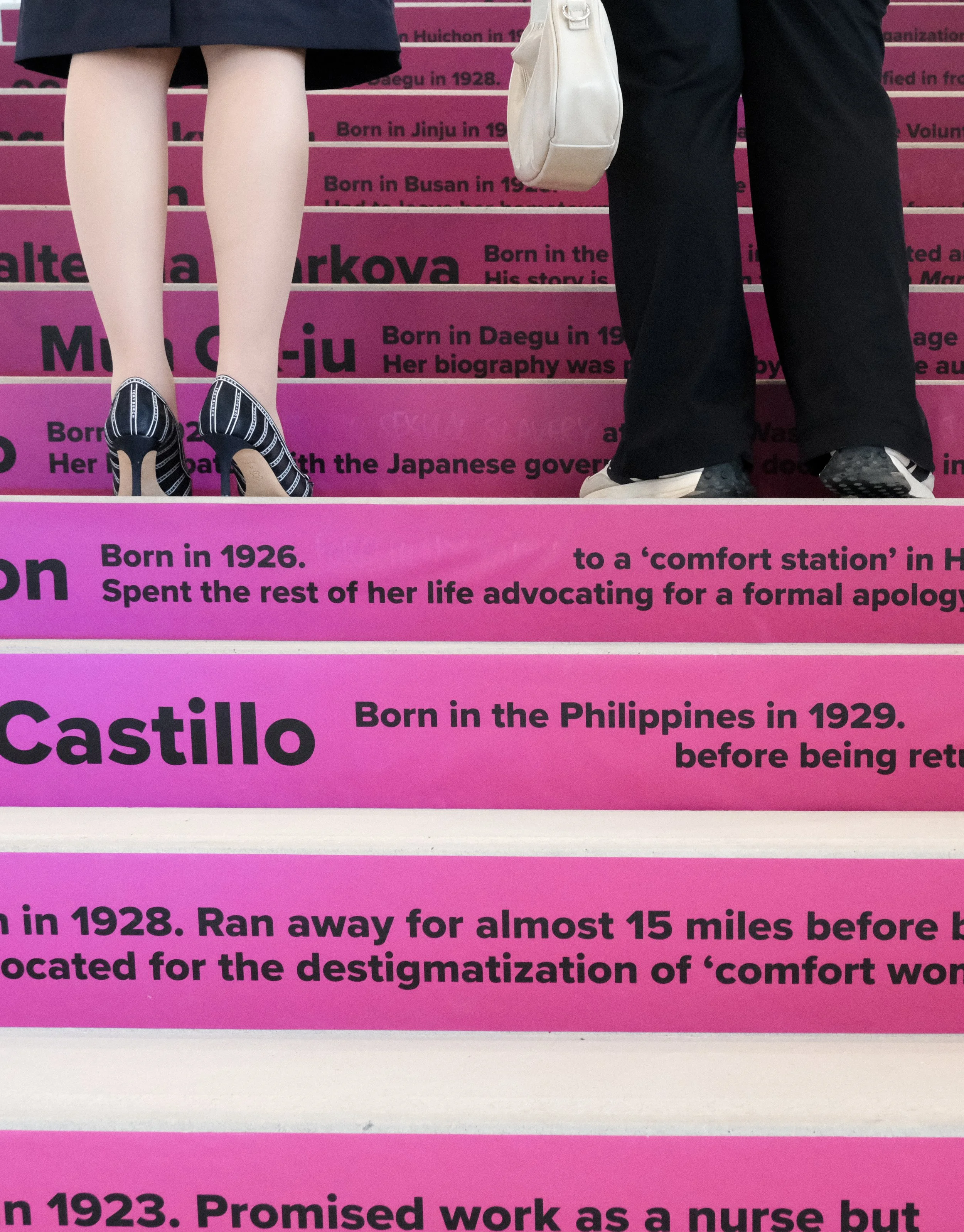
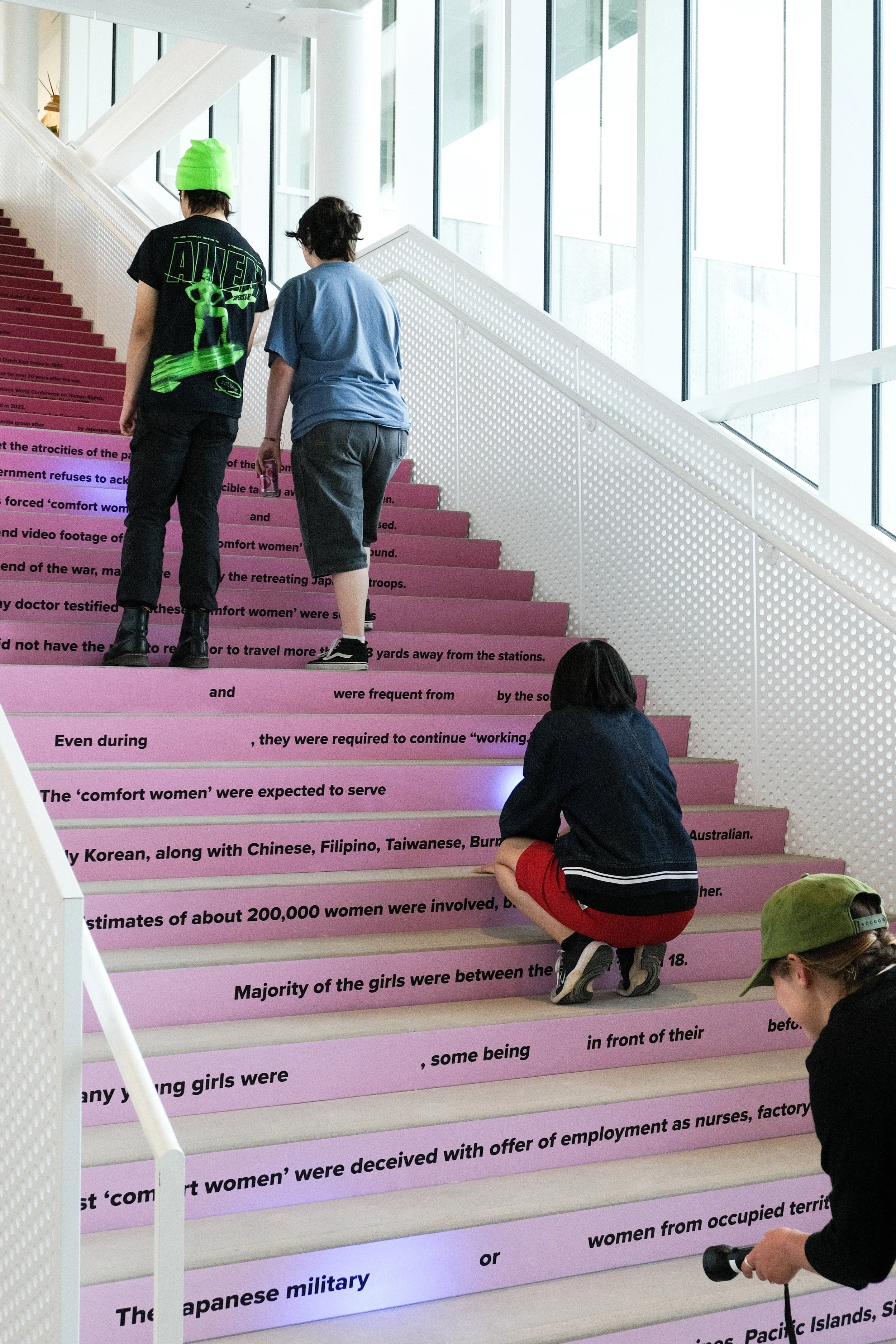
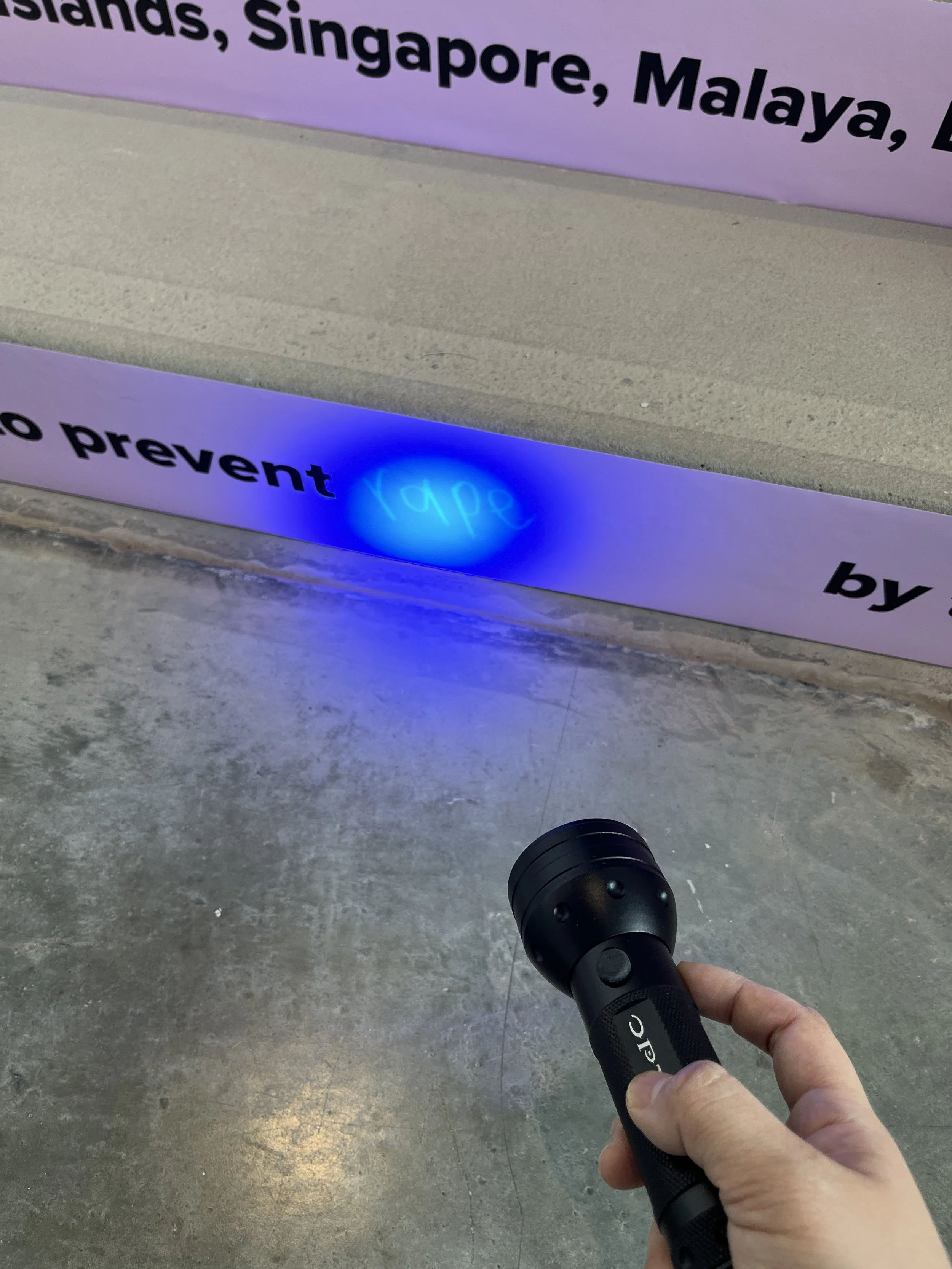
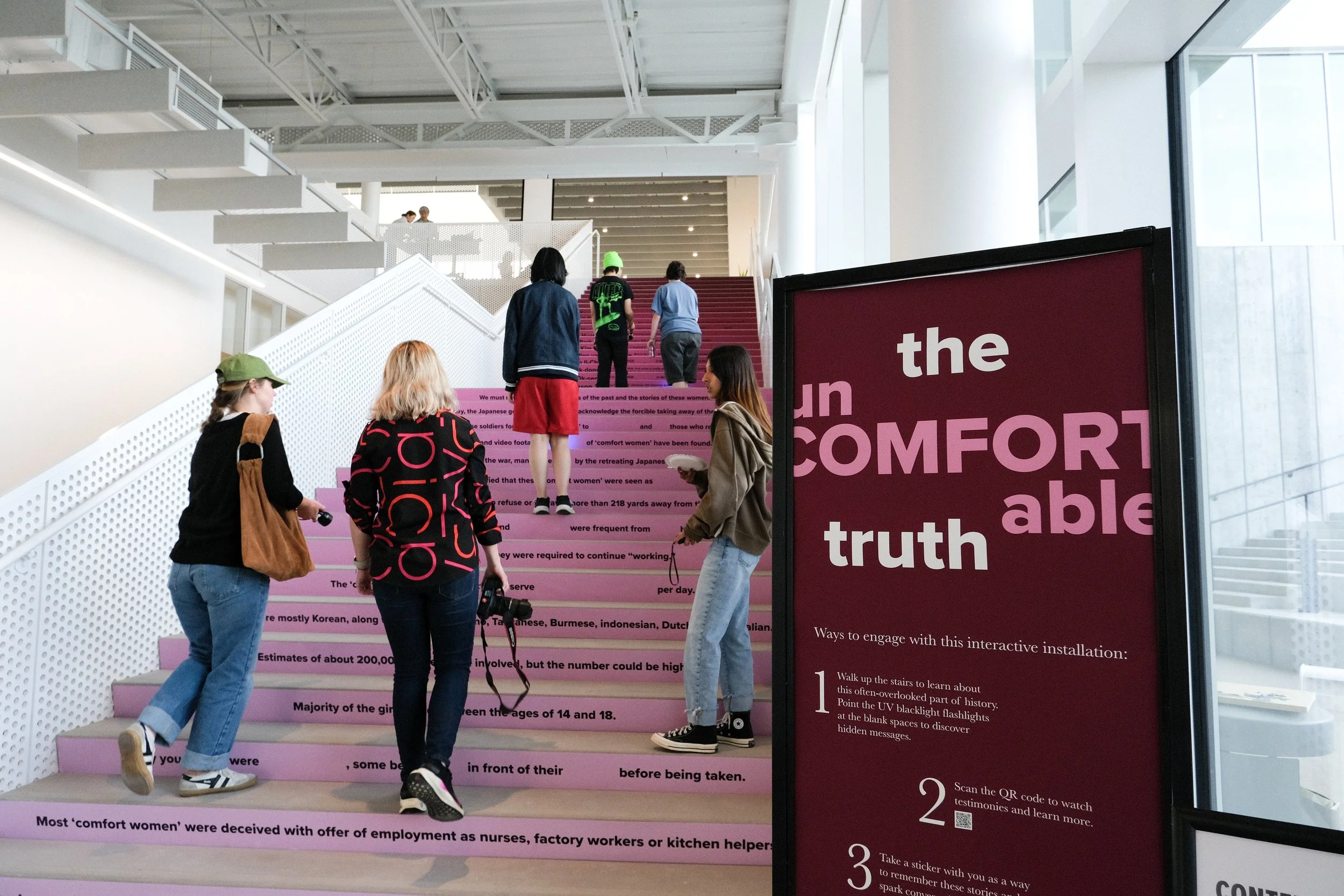
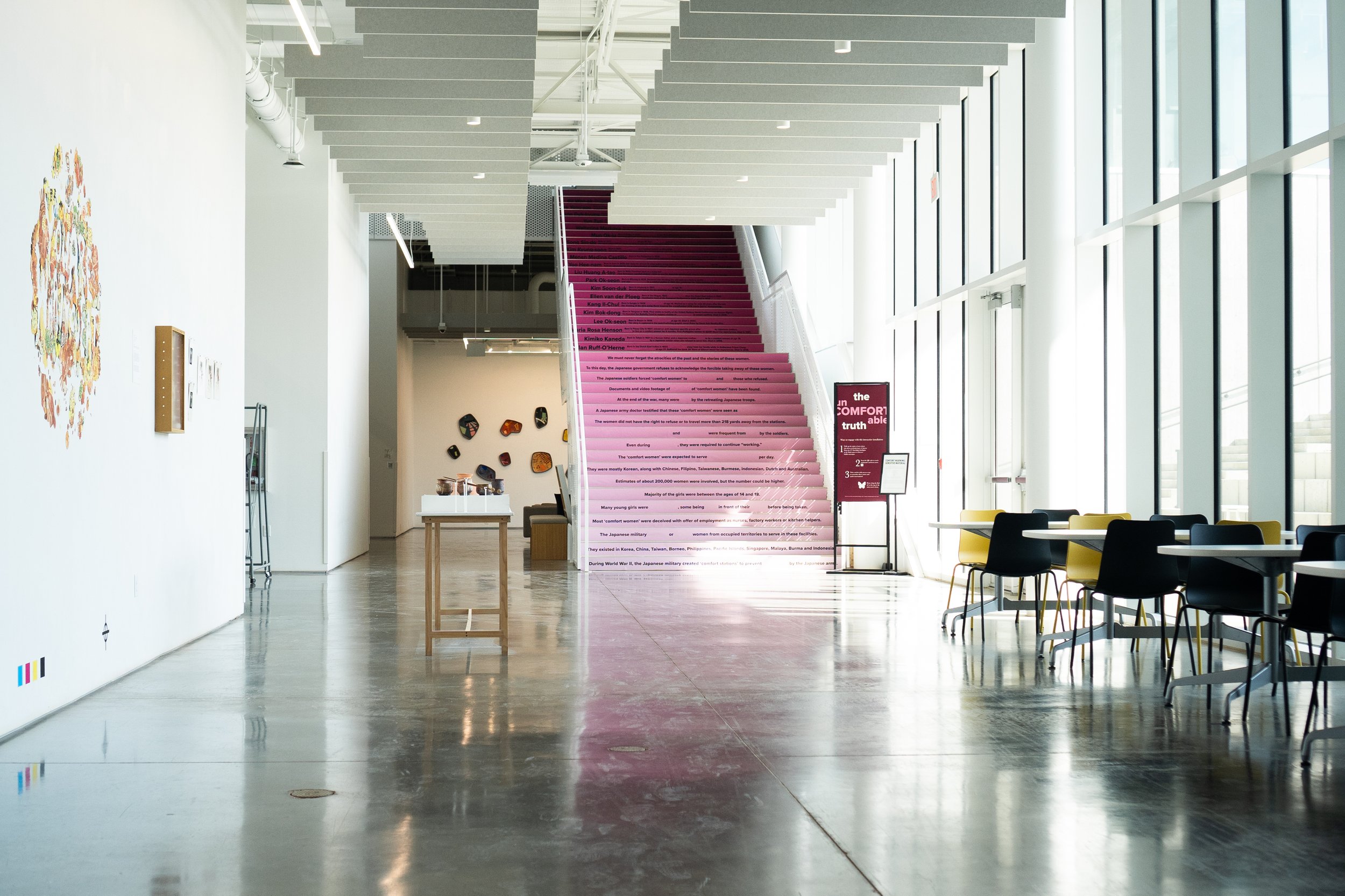
As a research-driven case study, the unCOMFORTable truth examines the practical and ethical complexities of presenting sensitive historical narratives within everyday academic spaces. The project explores how interactive storytelling in shared environments can create moments of pause, reflection, and dialogue, while allowing audiences to engage at their own pace and comfort level. By embedding layered narratives into a public stairway, the installation shifts historical engagement from passive consumption to active participation, requiring viewers to physically and emotionally encounter what has long been suppressed or overlooked. In doing so, the project demonstrates how design interventions in academic settings can foster critical engagement, support collective remembrance, and create space for underrepresented histories.